
Church History
Early History
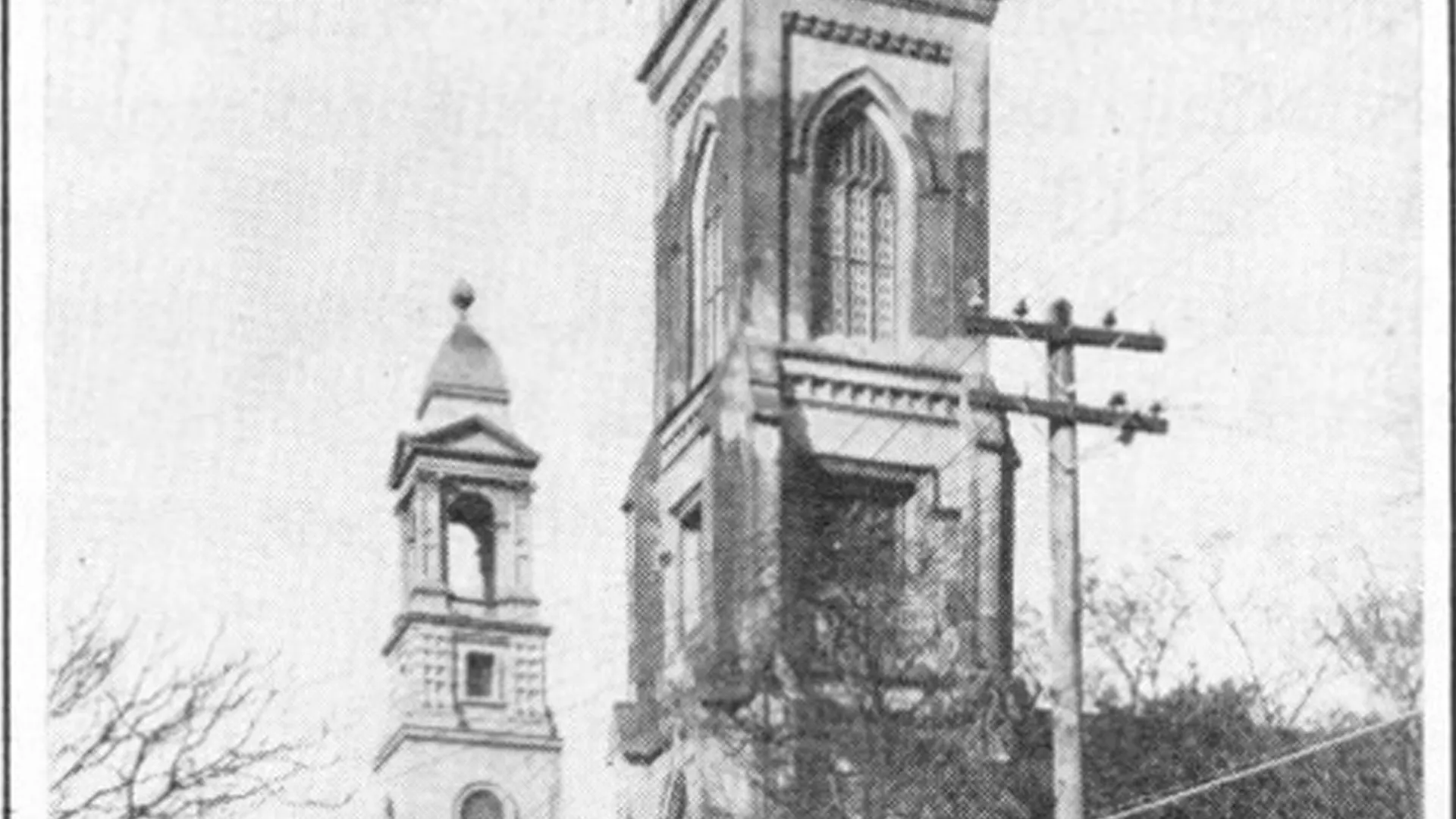
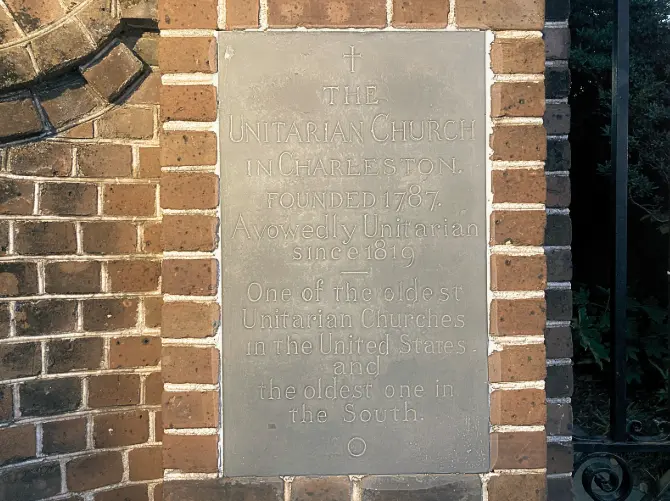
Ours is the oldest Unitarian Church in the South and the second oldest church building on the Charleston peninsula.
This church was started in 1774 to handle the overflow from the First Independent Church of Charleston, which is on the site of the present-day Circular Congregational Church. In those days, the official church of South Carolina was the Church of England, supported by taxes. Anyone who did not go to that church of England was viewed as a dissenter and joined an Independent Church.
The First Independent Church of Charleston was founded in 1681 and was referred to as “the old white meeting house.” It is believed that Meeting Street was named for that church. By 1772, the First Independent Church had so many members that more space was needed and our sanctuary was built to handle the overflow.
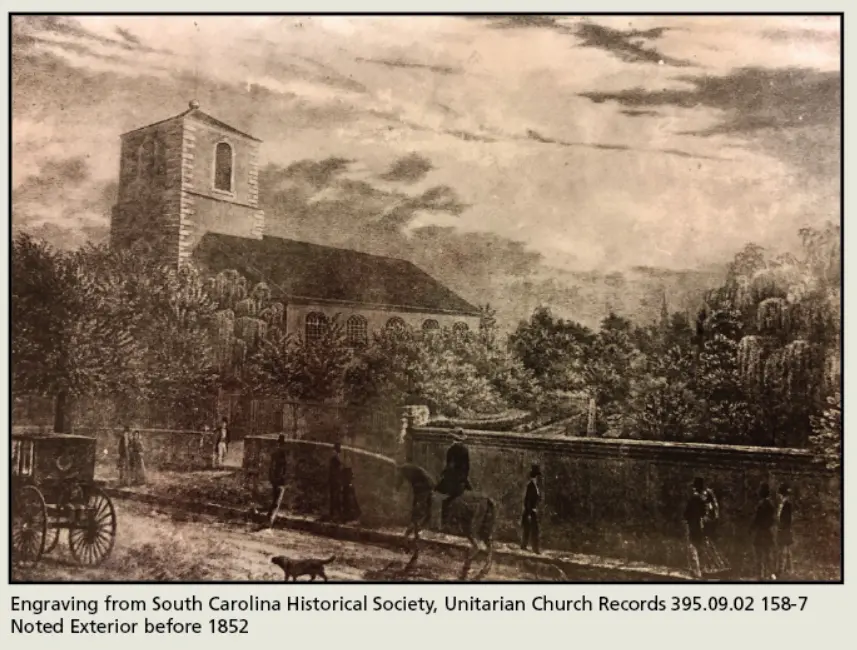
The structure that was built was a simple, utilitarian Georgian structure, much different than the sanctuary that stands today.
While the church was started in 1774 and substantially completed, it was not used as a church until 1787 due to the Revolutionary War. During the war, the building was first used by the Americans as a barracks, then by the English, and then again by the Americans at the close of the war. The English had great disdain for dissenters and did not treat the building well – some say it was used to stable horses.
Change to Unitarianism
After repairs, the church was consecrated in 1787, and for the next 25 years shared a ministry with the church on Meeting Street, with morning and afternoon services. In 1815, the first Unitarian minister, the Rev. Peter Thatcher, arrived. He brought with him a sermon from his father as a Unitarian. By 1838, the church was close with several prominent Unitarians.
In 1819, we received our second Unitarian minister, Rev. Samuel Gilman, whose picture is on the wall in our Sanctuary. Gilman remained with the church for almost 40 years, and he and his wife Caroline were responsible for keeping the church of debt and establishing it as an institution in Charleston. By 1832, Gilman was able to say that the congregation “averaged about 400 souls.”
Remodeling
The church had plenty of money in those days, Charleston being one of the wealthiest cities in the nation, and Gilman wanted to improve the edifice. To help finance the remodel, the old piano was sold to the congregation – you had to pay your seat in 1832, the architect Francis Lee was commissioned to design the building you see today. Lee was a member of the congregation and a mere 26 years old. He patterned the perpendicular gothic design after churches in England, particularly King’s College Chapel, Cambridge.
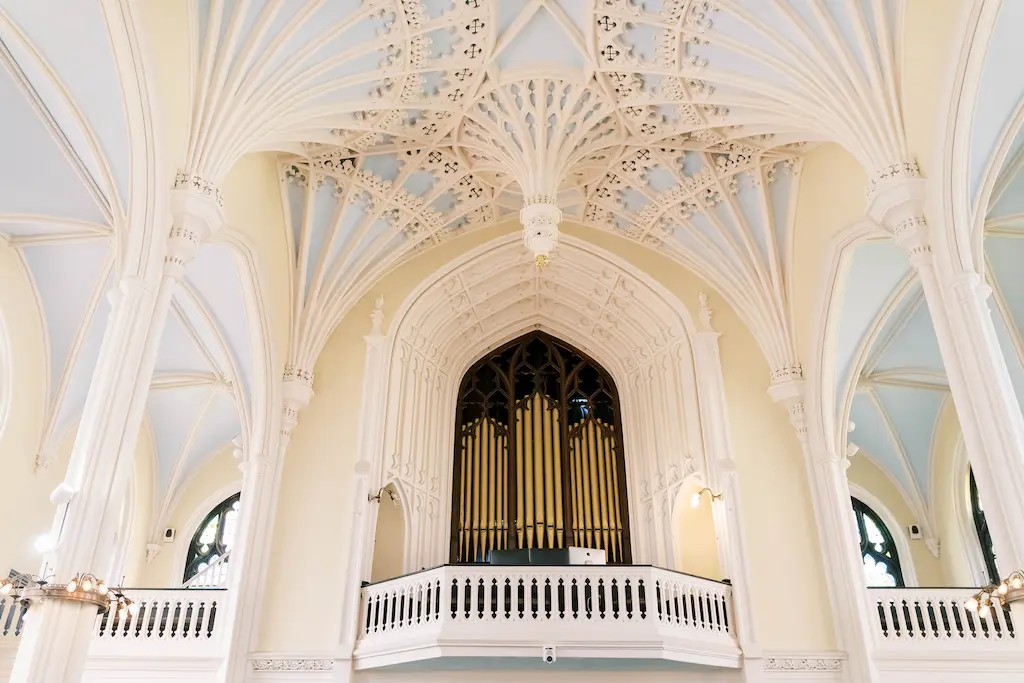
The beautiful fan traceried ceiling – all lathe and plaster – was copied from that structure.
The congregation was so attached to the brick walls of the old building that they would not permit them to be demolished, so the stucco you see today was placed over the old bricks.
Caroline Gilman
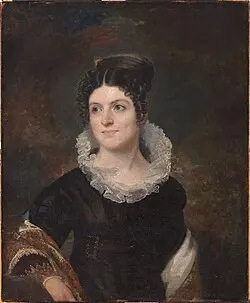
Caroline Gilman was a legend herself. She was at one time the best-known woman author in the South, and some would refer to Samuel Gilman as “the husband of Caroline Gilman.” She did many important things for the church, among them the design of the churchyard in 1831. The Gilmans had seven children, but only four girls, survived beyond infancy. The Gilmans and several of their children are buried in the churchyard.
In 1858, Samuel Gilman died while visiting his daughter in Massachusetts. He was 67 years old. Caroline Gilman lived to be 94 and died in 1888 while visiting her only surviving daughter in Washington, D.C.
Alva Gage
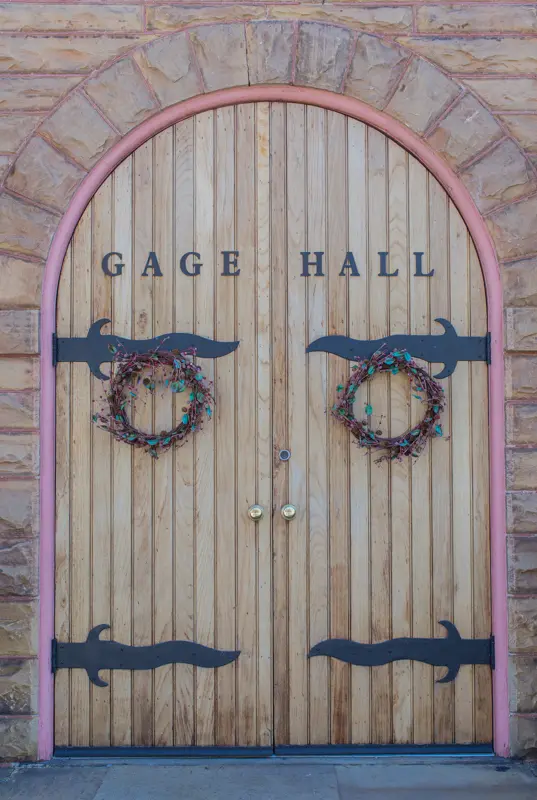
Our fellowship hall, Gage Hall, is named for Alva Gage who was one of 15 children, though he and his wife had no children of their own. Alva was a long-time church member who became wealthy selling rice packed in sawdust and bourbon in barrels and brought on barges from the North to the South. He retained his wealth through the Civil War by investing overseas, and by not converting his wealth to Confederate dollars. For a number of years, he was the financial savior of the church, even paying the minister’s salary for a time. In 1892, he funded the construction of Gage Hall, and upon his death in 1896, left half of his estate to the church.
Organ
The first organ was installed in 1825, which was the one sent to Columbia and was repaired. It was destroyed. The second organ was installed in 1864 after the war. The third organ was installed in 1916. The third organ had not worked since 1982 and would not be repaired. An electric organ was placed in the choir loft and then moved downstairs in 2000. It was replaced in 2010 by the digital organ that is on the right side of the church. The organ pipes visible on the balcony are decorative only.
Video Tour of the Church
Newsletter
Stay Connected with Us
Subscribe to our newsletter and get the latest news, upcoming events, and community updates delivered straight to your inbox. Whether you're a longtime member or just getting to know us, our newsletter is the best way to stay in the loop.
Sign up below to join our mailing list!